It is the night before the wedding, or the morning of. The toast you agreed to months ago is still a blank page, and every guide you open tells you to start two weeks early, which is the one thing you did not do. Put the guilt down.
You do not need two weeks. You need one hour, a phone to record yourself on, and a single rule: stop trying to write a toast and write down how you actually talk about these two people. A rushed toast does not fail because of time. It fails because of polish.
The real problem is smoothness
Sit down under a deadline and your brain reaches for the safest, roundest words it knows. Those words are exactly the ones a language model produces, because a model learned language from the same instinct: smoothness, balance, and no risk. Perfectly even sentences. A compliment that could apply to any couple in any decade. Adjectives standing in where memory should be.
That is what “reads like AI” actually means here. It was never about vocabulary or grammar. A toast sounds generated when it says nothing that required you to have been in the room. Guests hear that voice more often than you think. A 2026 survey of 1,500 UK adults for the card company Moonpig found that 45% of 25 to 34 year olds had used AI to help draft a wedding speech, and around a third of best men and maids of honour admitted they struggled to find the words at all. The room has heard the sound of a machine-written toast. Do not add to the pile.
Sincerity is not a plan. Specificity is.
Most advice tells you to be sincere, as if sincerity were a technique. At a microphone in front of eighty people it is not. Left alone, sincerity comes out as vague warmth, because nobody can argue with a feeling. What reads as genuine is a fact the room can check: a detail so particular that no one else in that room could have supplied it. The winning move is rarely “they are so in love.” It is the small habit, the quiet gesture, the thing one of them does that the other one specifically loves.
Dig for material with these prompts:
- The first moment you realised this relationship was serious. Not the engagement. The quieter moment that came before it.
- A small habit of theirs you have watched for years.
- A time they handled something badly together and came out fine.
- One thing each of them does that the other one specifically loves.
Pick the memory that gives you a physical reaction. A laugh or a lump in the throat. That is your story, and you only need one.
When a line feels hollow, swap it for the version only you can write. The pattern is simple: a fact beats an adjective, every time.
| Sounds like everyone | Sounds like you |
|---|---|
| “They are each other’s best friend.” | “Alex still leaves a glass of water on Sam’s nightstand every night, even on the nights they are annoyed at each other.” |
| “I have watched their love grow over the years.” | “I knew Sam was serious the night they drove back across town to return the book Alex left at the restaurant.” |
| “May your life be full of happiness and adventure.” | “May your life hold more Sundays like last March, when you both quietly cancelled plans to stay home together.” |
Sample lines, not gospel. Yours only need to follow the pattern.
Write the ending first
The fastest structural fix is to build the toast backwards. Decide the single wish you are offering the couple. Then choose the story that earns that wish. Then write the sentence that introduces you. Working in reverse means every line pulls toward one landing instead of drifting, which is where rushed toasts usually die.
- One line to say who you are. “I’m Priya. Maya and I have been friends since we were eleven.”
- One story, about forty-five seconds. Scene, one detail, done.
- One sentence on what that memory shows about them as a couple.
- The wish, spoken to them directly rather than to the room.
- “To Maya and Carlos.” Glass up. Sit down.
That whole shape fits in roughly 225 to 300 words, which is ninety seconds to two minutes of talking at a normal pace. A Toastmasters survey of 273 wedding toasters found 64% kept their toast to five minutes or under, and the couple, the DJ and the caterer would all prefer you well below that ceiling. Nobody has ever left a reception complaining that the toasts were too short. The professional view lands in the same place: Vogue’s guide to writing a wedding speech quotes speechwriters who call two to four minutes the ideal length for a toast.
Three checks before you print it
- The every-wedding test. Swap in the names of two people you do not care about. If the toast still works, it is not about this couple.
- The read-aloud test. Record yourself on your phone. Everywhere you stumble is a sentence that is not yours. Rewrite it the way you would actually say it, even if the fix is grammatically messier.
- The only-you test. Does the toast contain at least one detail that nobody else in the room could have told? If not, it is still a draft.
If it passes all three, you are done. If you want a second opinion first, paste the draft into an AI detector and read what it flags. Treat the result as a map of your safest sentences, not a verdict on your character. The tool cannot hear a room or feel a friendship. It can only measure how generic your words are, and a flagged sentence usually means you played it safe instead of saying the thing you actually know.
Cut these without mercy
- The second story. One anecdote, well told, beats three that blur together. A second story doubles the length and halves the focus.
- Any compliment you could not back up with an example. If you cannot defend it, cut it.
- Anything you would not say with the couple’s grandparents in the front row. If a joke needs a warning attached, it does not belong at the microphone.
- A minute of apologising for being nervous. One honest line works. “I am terrified and also very happy to be here.” Then move on.
- Stories about events you were not at. The couple has other witnesses. Tell the memory that is yours.
On the night, aim lower
Write the final version on a folded index card, not your phone. A card does not light up and does not look like you are checking messages. Hold it low, glance down, and bring your eyes back to the couple. For the last two sentences, look only at them.
Practice for twenty minutes the morning of, out loud and standing up. That is enough. The same Toastmasters survey found 77% of wedding toasters had two drinks or fewer before speaking, which matches what professional speechwriters tell you: the glass can wait until after. Nerves are not the enemy. A blank brain is, and a card with three bullets on it fixes that.
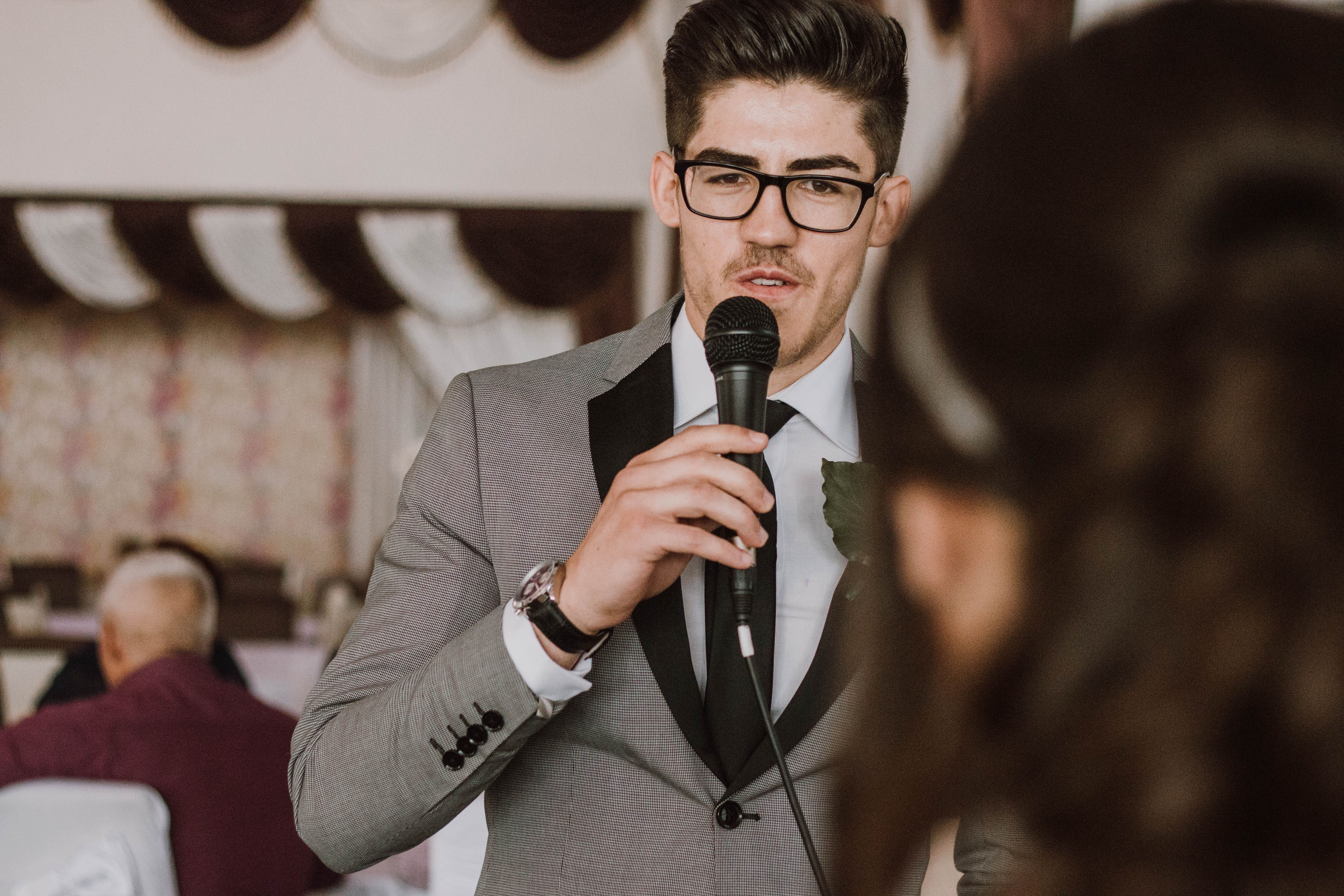
Here is the part most guides leave out. The couple will not remember your best line. They will remember that you stood up with a shaking voice and told a story with their real habits and their real names in it, one that made half the room turn to look at them. Years later, nobody describes a toast as well crafted. They say “everyone cried when Marcus spoke” or “you should have heard what Ben said about the lasagne.” Accuracy is the whole trick. Say the one true thing only you could say, sit down, and let the room do the rest. That is a speech no model could have written, because the words were never the point.